Friday, September 10, 2010

Ruger 22 Charger Review - Part 1: In The Box & Exterior Features

Ruger Charger Review, Ruger Review, 10/22 Pistol Review, Ruger Pistol Review
Over 20 years ago my wife (girlfriend then) gave me a Ruger 10/22 as a college graduation gift.  If I try to estimate, I have probably gone through at least 4 to 5 bricks of ammo for this gun each year.  That's between 2000 and 2500 rounds a year at the minimum.  Today, my two daughters, son and wife can pick up that rifle and put most people to shame with their shooting abilities.  It's a great rifle and I consider it a "must have" for anyone who enjoys shooting.  About 3 years ago, my son who was 12 years old at the time, saved his money and purchased his first rifle which was Ruger 10/22.  I was glad for two reasons.  The first reason is that I consider the purchase a wise investment.  The second is that now I don't have to wait until my gun is free so I can shoot when we go shooting.

About two years ago we noticed the Ruger 22 Charger while at a gun show and thought it was a slick looking pistol.  After doing some research, we decided to purchase the Ruger 22 Charger and I thought it was another great investment.  I purchased the pistol from Adventure Outdoors in Smyrna, Gerogia.  Today, Adventure Outdoors lists the Charger at $299.  The photo below shows the pistol with a NcStar 2-7x32E Pistol Scope installed.


The following information in green italics was taken directly from the Ruger 22 Charger website and is what Ruger states about this pistol.

Long-Range Target Shooting and Small Game Hunting have always been a challenge for .22 rimfire shooters. Now the Ruger® 22 Charger™ Pistol provides a rock steady platform for those challenging shots. The time-tested Ruger 10/22® action and its superbly reliable rotary magazine have been paired with a warp-proof, ergonomically designed pistol stock and a precision-adjustable bipod.  
  • Caliber: .22 LR
  • Material: Alloy Steel
  • Finish: Black Matte
  • Sights: None Stock: Black Laminate
  • Barrel Length: 10.00"
  • Length: 19.25"
  • Height: 5.38"
  • Width: 2.00"
  • Weight: 56.00 oz. (3.5 pounds)- Note that this weight does not include the bipod.
  • Capacity: 10
  • Twist: 1:16" RH
  • Grooves: 6
  • ERGONOMICALLY DESIGNED PISTOL STOCK available in black laminate is warp-proof and maintains accurate zero.
  • PRECISION-ADJUSTABLE BIPOD offers rock steady sighting.
  • UNIQUE COMBINATION SCOPE BASE provides both Weaver®-style and "tip-off" scope mounts for all of today's optical sighting systems.
  • QUICK AND EASY MAG RELEASE allows for simple removal of the legendary Ruger 10-shot rotary magazine.
  • ALSO INCLUDES: soft case
 Some other valuable links are below:
When you purchase the Ruger 22 Charger, it comes with the following:
  • Charger Pistol
  • 10 round magazine
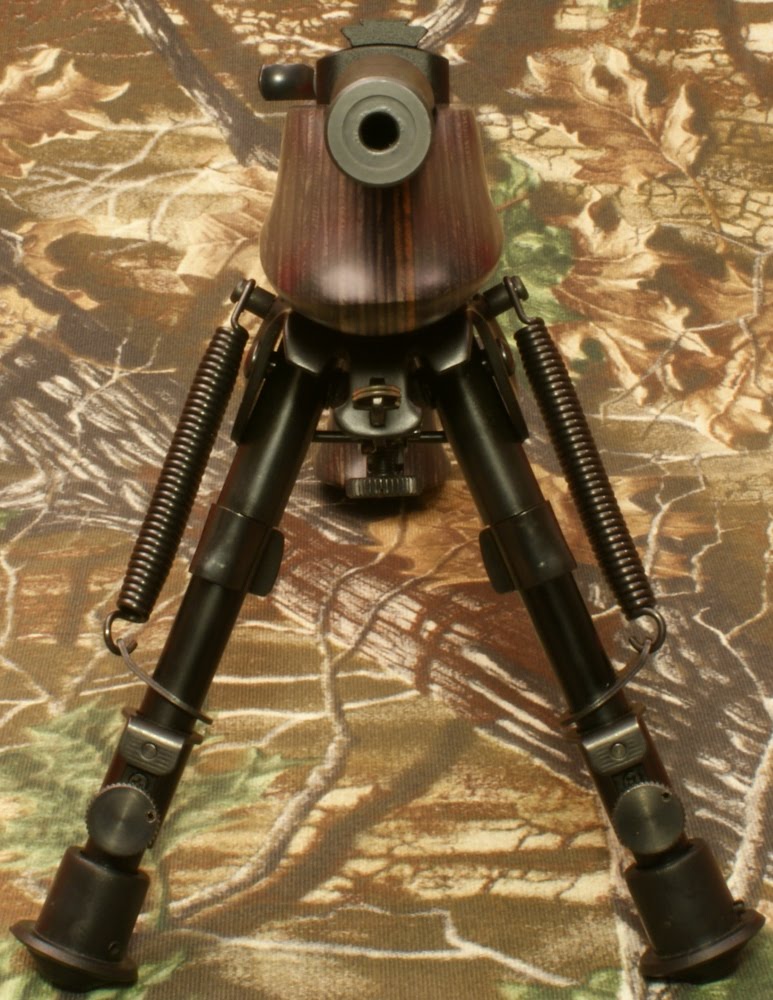
  • Shooters Ridge Model 40854 Bipod & Instructions
  • Charger Instruction Manual
  • Gun Lock & Instructions
  • Warranty Card


The case for the pistol is very simple and offers protection against scratches.  I'm not a big fan of this type of soft case when optics are involved, but it is still better than nothing.


The significant components are the pistol, magazine and bipod as shown below.  The great thing about this pistol is that it is the same action as the Ruger 10/22 and takes the same magazine.  Basically they took a 10/22 rifle, installed a 10" barrel, and put it on a pistol stock.


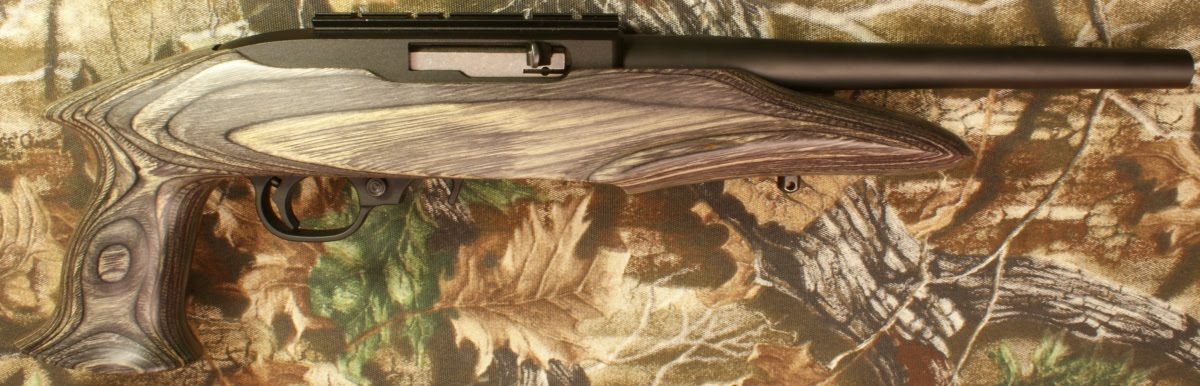
This next series of photos give you a good idea of the exterior features of the pistol.  I'm going to disassemble the pistol in another part of the review.  If you click on a photo, it will bring up a higher resolution photo.  The version of  this pistol shown has the Black Laminate stock.  The color of the stock in the photos accurately depicts the true color of my stock, which has a greenish tint.  Ruger has done an excellent job on the finish of this laminated stock.


Notice in the photos below the exended magazine release.  This is a difference from my older Ruger 10/22 rifles but appears to be common for all new Ruger 10/22 rifles.  In these photos you can see the 10 round rotary magazine is installed in the pistol.  This is the same magazine that is used in the rifles.  Over the years, I have found this to be the most reliable magazine for my 10/22 rifles and believe me I have worn out many plastic lip high capacity magazines.  Also shown is the cross bolt safety and the bolt lock, both of which I will cover more in Part 2 of the review.


Notice the recessed target crown and the warning stamped on the bottom of the barrel.  Ruger makes it very clear about the law and minimum barrel length on a rifle.  It may have been safer if they would have said "Warning - Do not install on a rifle stock".  FYI, if you are interested in "Short Barrel Rifles", you may want to look at this link to understand the associated legal issues.


The forend has an interesting curvature and swivel stud for mounting the bipod.


The matte finish on the receiver is different than from my other (older) Ruger 10/22 rifles.


The gun weighed in at 3.33 pounds without the magazine and bipod.


The empty magazine weighed in at 0.12 pounds.


The bipod weighed in at 0.64 pounds.


The total weight of the pistol with an empty magazine and the bipod installed is 4.10 pounds.  Clearly you can see that Ruger's advertised weight of the pistol is without the bipod.  Keep in mind that this weight does not include any optics/sights.  The final weight will be more depending on your choice of sights.


Bottom Line (Part 1):
Great job Ruger.  The Ruger 22 Charger has great eye appeal. The pistol feels good in your hand, but Ruger put a bipod on the 22 Charger for a reason. The balance of the pistol is front-end heavy and most shooters would be looking for some front end support anyway. If you are familiar with the Ruger 10/22 rifles, the 22 Charger pistol is basically a short barrel version with a pistol grip.  The pistol comes with no sights, so you need to figure that cost in up front when you purchase the pistol.

This review of the Ruger 22 Charger is broken down into multiple parts. Part 2 covers disassembly of the Ruger 22 Charger and Part 3 will cover range test results. Part 3 is in work and I will add links to this part of the review, so check back again soon.


Monday, September 6, 2010

FNAR Review - Fifth Range Test (100 yards)

It has been a while since my last range test and I want to show the results of some additional range testing at 100 yards. I'm still trying to find some off-the-shelf hunting ammo that I can use for the majority of my hunts (less than a 200 yard shot).  For this test, I selected three hunting rounds, one match round and also brought some plinking ammo just to get the feel before shooting the other stuff.

I selected the following .308 Win. Ammo:
  • Federal Match Gold Medal 168 Grain Sierra Matchking BTHP - Target Ammo
  • Federal Premium 165 Grain Sierra Gameking BTSP - Hunting Ammo
  • Fusion 165 Grain - Hunting Ammo
  • Winchester 150 Grain Power-Point - Hunting Ammo

All shots were from 100 yards and you can see my bench setup below.  I was actually swapping out between shooting my FNAR and a borrowed LWRC M6A2 which I was reviewing.


This was one of those days where I was disappointed with my shooting abilities.  I really didn't have a good excuse other than myself and you will see that from the data below.  My first 5 shot group with the Federal Match Gold Medal was a 2.47" group.  My second group with this same ammo was 1.38".  I was really expecting sub MOA based on my previous range tests.


Next I switched over to the Federal Premium and shot a 1.94" and 1.95" group.  Again, I was disappointed.


Since my shooting skills were really sucking at this point, I decided to only shoot two more groups of 5.  This next group is with the Fusion ammo.


Last I shot the Winchester Power-Point. I shot some of this during one of my last range tests and it really looked promising.  I decided to tweak my scope before the shots since I was grouping everything high and left.  The 5 shot group below measured 1.67".


Personally, I think the issue with my shooting is one of two things.  First it is probably me and I'm sure that is a good portion, but I know I have done better.  The second may be that I'm getting some fouling in the groves of my barrel.  With the group above, I'm comfortable taking this to the woods and deer hunting out to 200 yards, but I'm sure I'm more capable and I will shoot it again prior to rifle season.

A buddy of mine has been talking about Butch's Boreshine so I decided to get a bottle.  I thoroughly cleaned the rifle and will head back to the range in a couple of weeks.  For now, I think I'm going to focus on the Winchester Power-Points because you can purchase these at any Walmart and so far they seem to group.

Bottom Line:
I'm still happy with my FNAR.  It has never jammed and still appears to be a solid rifle.  My results for this range test were not as good as the Fourth Range Test, but that's life.

You can see all of my posts on my FNAR rifle by going to my Summary Page.


Sunday, September 5, 2010

Harris Bipod Review Swivel Series Model LM

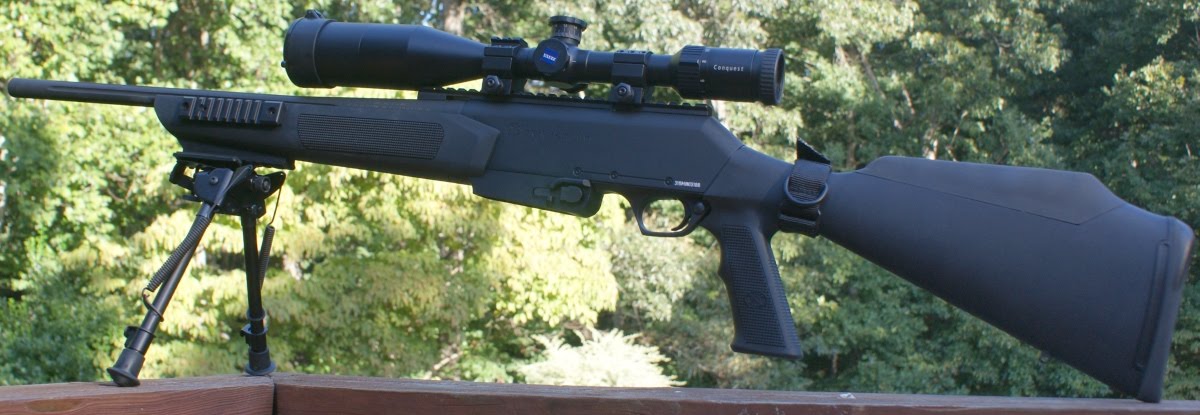
At this point, between my son and I, we own 6 different bipods.  I'm not sure you can say I'm an expert, but I feel I'm pretty informed about bipods.  This review is actually the fourth bipod review I have done and this review is for the Harris Series S Model LM Bipod.  The Harris website refers to this as Model HBLM-S.  The other Harris Bipod that I reviewed was the S Series Model 25C.  My goal with purchasing the Model LM bipod was to have a bench bipod that I could use for checking zero on various rifles.  Specifically, I wanted to put it on my FNAR as shown below.


I purchased the Harris Series S Model LM Bipod at a gun show for $95.  The next two photos show the packaged bipod and what is inside the package.


The bipod measures about 9" in it's folded state and weighed it at 0.89 pounds.


Harris advertises this bipod with legs that extend 9" to 13".  The next two photos show the shortest height of 7 7/8" and tallest height of 11 1/2".  The 9" to 13" lengths appear to be measured down the legs.


The legs have 7 positions (fully retracted, fully extended and 5 intermediate) that lock in place with the leg notches.  These notches ensure that the leg will not retract when putting pressure on the gun.  When the legs are fully retracted and locked in the notch, a small coil spring becomes preloaded.  When you press adjustment tab (left side in photo below), the leg will actually pop out to the longest position and lock in place.


The two legs are spring loaded to be in the down or folded positions by the long springs shown below.


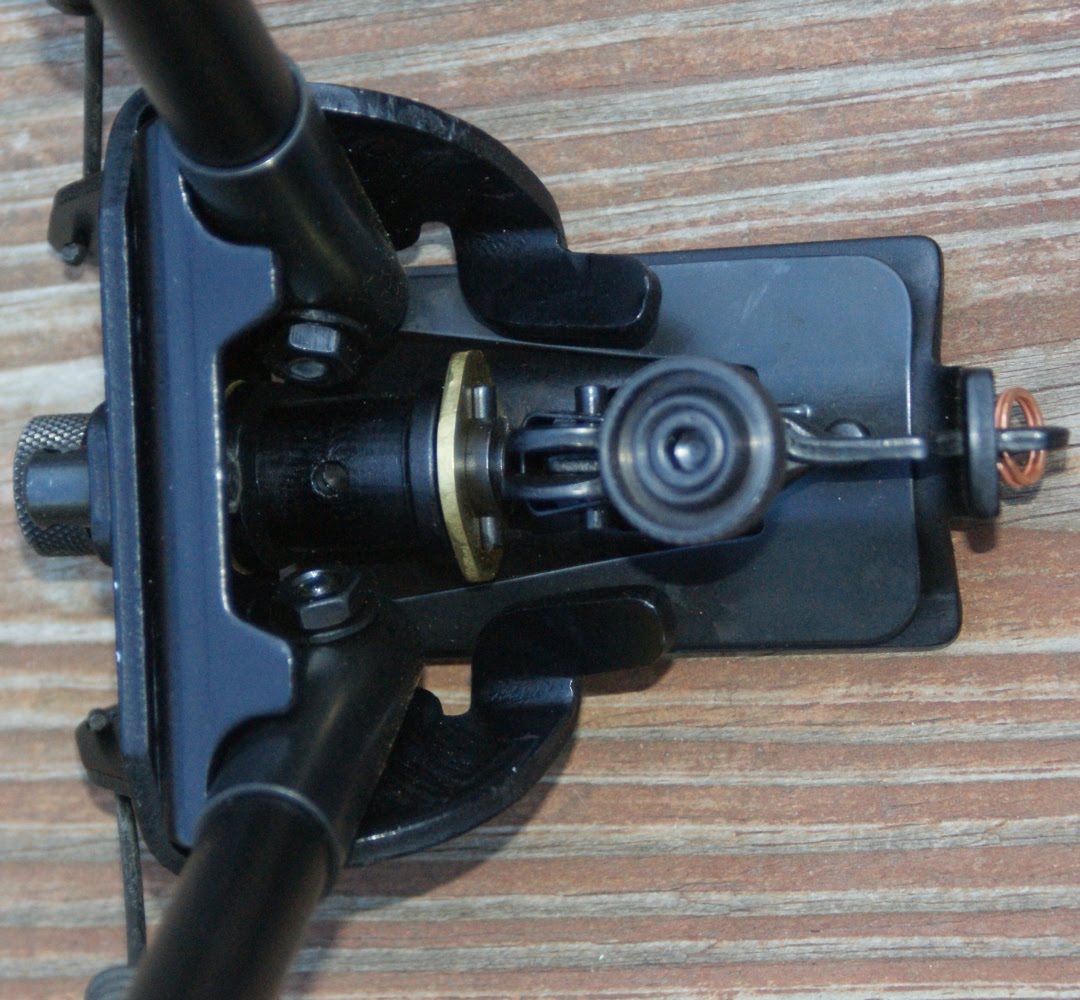
The attachment plate to the rifle swivels on a center pivot allowing rotations as shown below.  This help maintain a vertical rifle position when on uneven ground.  You can also see the softer pads that contact your stock to prevent damage when using the bipod.


The force required to swivel the rifle can be adjusted by tightening or loosening the knurled thumb nut on the back of the bipod as shown on the left side in the photo below.  You can also see that Harris has included an additional swivel stud so that you can still attach a sling to your rifle.


I have included the next couple of photos so you can see the attachment area from different views.


The next two photos show the bipod installed on my FNAR rifle.  On this rifle, the swivel stud is attached to the bottom rail.


Bottom Line:
The Harris Series S Model LM Bipod appears to be a quality product.  Harris actually set the standard in bipods over the years and there are now several manufacturers who produce Harris simulants.  Out of the 6 bipods that I have in my gun room, three are Harris bipods and I have never had any problems with their products.

The only issue I have is that I may have purchased the wrong height bipod.   I wish I had gotten the 6" to 9" version.  It seems that the minimum height of the Model LM is higher than I would prefer for bench shooting and I never use the adjustment features on the legs.  Next time I'm at the gun show, I will see if I can work a swap to the other shorter model.